
Skip to content

How to Clean Solar Panels Safely

The seven-step process for cleaning solar panels safely, what to avoid, and when professional cleaning should replace DIY work.

Overview

Clean solar panels with water, non-abrasive tools, and methods compatible with the module manufacturer’s instructions. The safest approach removes dust, pollen, bird droppings, and other surface contamination without scratching the glass, stressing electrical components, or creating unnecessary roof-access risks.

Many systems do not need frequent manual washing. Rain can remove some loose dust from tilted modules, while persistent bird residue, pollen, grime, and heavy environmental buildup may require additional cleaning. Panel condition and local exposure should determine whether cleaning is necessary.

SolarReadyHub recommends checking manufacturer instructions before choosing any cleaning method, whether that’s DIY work or a full solar panel cleaning service. Homeowners should also avoid climbing onto steep or elevated roofs when professional access provides the safer option.

Need solar panels cleaned but cannot safely reach the array? SolarReadyHub can help property owners compare professional cleaning options based on panel quantity, contamination, roof configuration, and access conditions. Request a property-specific estimate before attempting difficult rooftop work.

Step 1

Check Whether Solar Panels Need Cleaning

Cleaning should start with an assessment rather than an automatic schedule. Visible contamination, local environmental exposure, and system monitoring can help determine whether washing is necessary.

  • Inspect Panels From a Safe Location

    Look for visible dust, pollen, leaves, bird droppings, or other material on the module surface. Ground-level observation, monitoring, or safely positioned viewpoints can provide useful information without requiring roof access. Light, evenly distributed dust may not justify immediate intervention. Concentrated contamination covering sections of individual modules deserves more attention because the material directly obstructs incoming sunlight.

  • Review Solar Production

    Monitoring can help identify unusual changes in electricity generation. Compare similar weather and seasonal conditions rather than comparing a cloudy winter day with a clear summer day. A production decline does not automatically indicate dirty panels. New shading, inverter faults, wiring problems, equipment damage, and monitoring issues can also affect output.

Step 2

Check Manufacturer Cleaning Instructions

Solar modules can differ in approved cleaning procedures. The manufacturer’s documentation should guide water temperature, tools, detergents, cleaning frequency, and other equipment-specific requirements.

  • Follow Module-Specific Guidance

    Check documentation for the installed panel model before cleaning. Manufacturer instructions can identify prohibited chemicals, abrasive materials, pressure limits, or other practices that could affect module surfaces. This step also helps protect warranty compliance. Generic online cleaning advice should not override instructions written for the actual photovoltaic equipment.

  • Inspect for Damage Before Washing

    Visible cracked glass, exposed wiring, damaged connectors, loose components, or other obvious defects require additional caution. Cleaning should not become an attempt to repair electrical or structural problems. A damaged system may require professional inspection before washing. SolarReadyHub recommends treating cleaning and repair as separate tasks when visible damage exists.

    Solar Panel Inspection

Step 3

Choose the Right Time to Clean Solar Panels

Cleaning conditions affect both safety and the equipment. A cool panel surface and stable weather generally create better working conditions than hot modules, strong winds, rain, or icy surfaces.

  • Avoid Cleaning Hot Panels

    Solar modules can become hot after prolonged exposure to direct sunlight. Applying substantially cooler water to a very hot surface can create unnecessary thermal stress. Early morning or another cool period can provide more suitable conditions, subject to manufacturer instructions. Panels should not be cleaned when frost, ice, or unsafe weather creates additional hazards.

  • Consider Weather Conditions

    Strong wind and rain can make outdoor maintenance more difficult, particularly on rooftops. Wet roofing surfaces can also increase slip risk. Weather considerations matter even when the panels themselves are easy to clean. Safe access should remain more important than completing the task on a particular day.

Step 4

Gather Solar-Safe Cleaning Equipment

Solar panel cleaning generally requires relatively simple solar panel cleaning tools. Water, a soft non-abrasive brush or suitable cleaning head, and equipment that allows safe access can handle many ordinary residential cleaning situations.

  • Use Non-Abrasive Tools

    A soft brush, sponge, or cleaning head designed for delicate surfaces can remove loose contamination without intentionally scratching module glass. Hard brushes, metal tools, and abrasive pads can create unnecessary surface risk. An extension or telescopic pole can improve reach for some accessible arrays. The safest tool is one that cleans the required area without forcing the homeowner into an unsafe position.

    Solar Panel Cleaning Kit
  • Use Appropriate Water

    Water can remove loose dust and help soften adhered contamination. Local water quality can affect the amount of mineral residue left after drying. Some professional systems use purified or deionized water to reduce spotting. Homeowners should still follow module-specific instructions rather than assuming a particular water treatment is required for every array.

  • Be Careful With Cleaning Products

    Plain water may be sufficient for routine contamination. Persistent deposits may require a manufacturer-approved mild cleaning solution. Household chemicals should not automatically be applied to photovoltaic modules. Solvents, abrasive compounds, and unsuitable detergents can affect surfaces or leave residue.

Step 5

Remove Loose Debris Before Washing

Leaves, twigs, and other loose material should be removed carefully before wet cleaning begins. Dragging larger debris across module glass can create avoidable abrasion.

  • Clear Accessible Debris

    Remove loose material without pulling on wiring or disturbing mounting components. Debris trapped underneath modules can involve areas that require more careful professional access. Homeowners should avoid inserting tools beneath panels without understanding the array configuration. Photovoltaic wiring remains part of an electrical system even when surface cleaning appears simple.

  • Do Not Scrape the Glass

    Bird residue or dried material may require soaking rather than aggressive scraping. Sharp tools can damage glass or surface coatings. Allowing water to soften persistent contamination reduces the need for mechanical force. Manufacturer guidance should determine whether any additional cleaning agent is appropriate.

Step 6

Wash the Solar Panel Surface Gently

Once loose debris has been addressed, rinse and clean the module surface using an equipment-compatible method. Work gradually rather than applying excessive force or pressure.

  • Rinse the Panels

    Water helps loosen dust and surface deposits. A gentle flow provides a different cleaning action from concentrated high-pressure washing. The goal is to move contamination away from the module without directing excessive pressure toward seals, connectors, wiring, or surrounding roof components.

  • Loosen Persistent Dirt

    Use a soft cleaning head to loosen material that water alone does not remove. Gentle overlapping movements can cover the module without aggressive scrubbing. Bird droppings and dried deposits may need additional soaking time. Increasing force should not replace patience and an appropriate cleaning method.

  • Complete a Final Rinse

    Rinse loosened contamination from the panel surface. Leaving dirty water or cleaning residue on the glass can reduce the benefit of the cleaning process. Where mineral spotting creates a recurring problem, water quality may deserve consideration. Professional cleaners may use purified-water systems when local conditions justify that approach.

Step 7

Let Panels Dry and Check the Result

After cleaning, allow the modules to dry naturally unless the manufacturer recommends another method. Inspect the visible surface for remaining deposits without walking unnecessarily around the array.

  • Check for Missed Contamination

    Persistent bird residue or grime may require another gentle cleaning pass. Avoid repeatedly scrubbing one area with excessive pressure. The goal is a clean light-receiving surface, not cosmetic perfection. Small water spots do not automatically justify another potentially risky roof-cleaning session.

  • Review Production Later

    System monitoring can help determine whether production behaves normally after cleaning. Evaluate output over comparable weather conditions rather than expecting one immediate number to prove the value of cleaning. If substantial underperformance remains, dirt may not have been the cause. A separate system inspection can evaluate inverter, wiring, module, or other equipment issues.

What to Avoid

What Should You Avoid When Cleaning Solar Panels?

The wrong cleaning method can introduce equipment or personal safety risks. Homeowners should avoid techniques that use excessive force, abrasive materials, incompatible chemicals, or unnecessary rooftop access.

  • Avoid Abrasive Cleaning Materials

    Metal scrapers, abrasive pads, hard brushes, and gritty cleaning products can damage module surfaces. Scratches can become permanent even when the contamination itself was temporary. Soft tools provide a safer approach for routine dirt. Persistent material should generally be softened before removal instead of scraped aggressively.

  • Avoid Uncontrolled High Pressure

    A pressure washer should not automatically be treated as suitable solar cleaning equipment. Concentrated pressure can create unnecessary risk around seals, frames, connectors, wiring, and roofing. Follow the panel manufacturer's instructions if pressure limitations or approved methods are specified. More water pressure does not automatically mean more effective cleaning.

  • Avoid Walking on Solar Panels

    Photovoltaic modules are not walking surfaces. Standing or kneeling on modules can place mechanical stress on glass, frames, cells, and mounting components. Access planning should avoid loading the panels. If the array cannot be reached without stepping on modules or taking substantial fall risk, professional service becomes the more appropriate option.

Rooftop Systems

How to Clean Rooftop Solar Panels

Rooftop cleaning requires the same module-safe methods as other arrays, but access creates the main additional concern. Roof height, pitch, material, moisture, and array position can make an otherwise simple roof solar panel cleaning job hazardous.

  • Clean From the Ground When Possible

    A suitable telescopic cleaning system can allow some low or accessible arrays to be serviced without climbing onto the roof. Ground-level access reduces exposure to falls and minimizes foot traffic around the array. Not every roof can be reached effectively this way. Homeowners should not improvise unsafe extensions or unstable ladder positions simply to avoid professional service.

  • Know When to Hire a Professional

    Steep roofs, multi-story homes, tile surfaces, difficult module placement, and heavy contamination can justify professional cleaning. Contractors can assess access requirements before work begins. Professional residential cleaning commonly costs $10 to $20 per panel, while flat-rate cleaning can run approximately $300 to $630. A medium system of around 20 panels commonly falls around $300 to $500, depending on access and service scope.

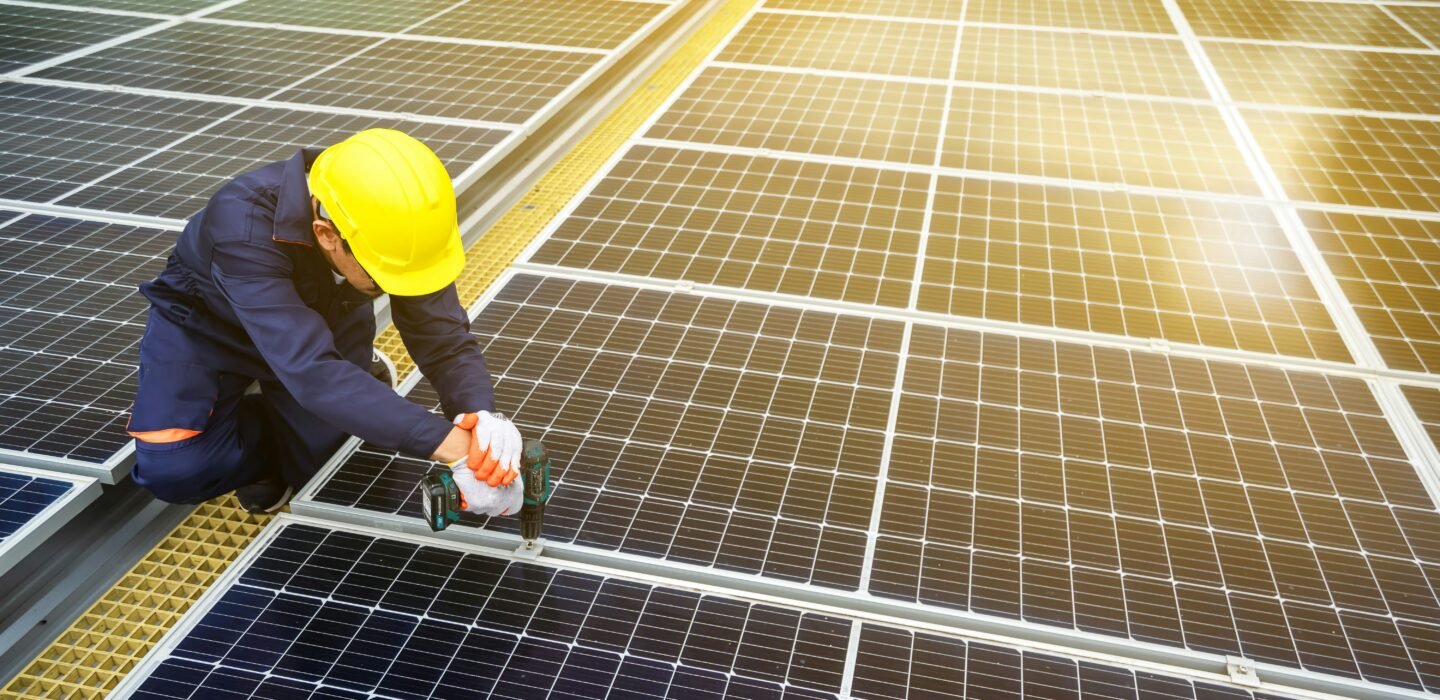
    Professional Solar Panel Cleaning Service

Ground-Mounted Systems

How to Clean Ground-Mounted Solar Panels

Ground-mounted arrays generally provide easier cleaning access because the modules sit closer to ground level. The same principles of gentle washing, non-abrasive equipment, and manufacturer guidance still apply.

  • Maintain Safe Access Around the Array

    Keep vegetation and obstacles from blocking normal access to the modules. Ground conditions should provide stable footing before cleaning begins. Avoid disturbing exposed electrical equipment, conduit, connectors, or mounting hardware. Easier physical access does not eliminate the electrical nature of the system.

  • Clean From an Accessible Position

    Use a soft cleaning head and water to remove contamination while remaining on stable ground where possible. Work from the upper portion of the tilted module toward the lower edge so loosened material can move away from cleaned areas. Ground-mounted systems can make visual condition checks easier as well. Visible damage should still trigger professional evaluation rather than DIY repair.

Professional vs. DIY

When Should Professional Cleaning Replace DIY Cleaning?

Professional cleaning becomes the stronger option when roof access, array size, contamination, or equipment condition makes DIY work impractical. Homeowners should evaluate safety before potential savings.

Consider a 20-panel system on a steep second-story roof. Professional cleaning may cost roughly $300 to $500, but avoiding hazardous roof access can justify that expense even before potential equipment damage is considered. Compare solar panel cleaning near me options before deciding.

SolarReadyHub recommends professional evaluation when the homeowner cannot reach the array safely from an appropriate working position. Cleaning should never require stepping on modules or taking uncontrolled fall risks.

See the full solar panel cleaning cost breakdown, learn how often to clean solar panels, or compare solar panel cleaning robots as an automated alternative to manual washing.

Frequently Asked Questions About Cleaning Solar Panels

What is the best way to clean solar panels?

Use water and a soft, non-abrasive cleaning tool while following the panel manufacturer's instructions. Persistent contamination should be softened and removed gently rather than scraped or blasted away.

Can I clean solar panels with tap water?

Tap water can be suitable when manufacturer guidance allows it, but hard water may leave mineral spots after drying. Water quality and equipment-specific instructions should determine whether purified water provides an advantage.

Can I use dish soap on solar panels?

Do not automatically use household detergent. Check the module manufacturer's cleaning instructions before applying any chemical because unsuitable products can leave residue or affect panel surfaces.

Can I pressure wash solar panels?

High-pressure washing should not automatically be used on photovoltaic modules. Concentrated pressure can create unnecessary risk around seals, frames, wiring, connectors, and nearby roof components.

How often should solar panels be cleaned?

There is no universal schedule for every system. Dust, pollen, rainfall, bird activity, nearby trees, roof angle, and actual panel condition should determine cleaning frequency.

Should I turn solar panels off before cleaning?

Follow the system manufacturer's shutdown and maintenance instructions. Solar modules can continue producing DC electricity whenever sufficient light reaches them, so homeowners should not assume switching off one household breaker makes every photovoltaic component electrically inactive.

Clean Solar Panels Safely

Effective solar panel cleaning depends on actual contamination, manufacturer guidance, non-abrasive equipment, appropriate water, gentle cleaning, and safe access. Aggressive washing does not improve a cleaning method when the same contamination can be removed without unnecessary equipment stress. SolarReadyHub helps property owners determine when routine cleaning remains manageable and when professional service provides the more practical option. Roof configuration and access should carry as much weight as the amount of visible dirt. Need professional solar panel cleaning in 2026? Request a property-specific estimate based on panel quantity, contamination, array location, and access conditions. Compare the cleaning scope before attempting difficult rooftop maintenance.

Get a Free Quote

Switch to Solar Today

Learn how Solaris delivers sustainable, high-performance solar solutions to reduce energy costs and protect our planet's future.

Our Services